
Mike Strantz built two courses on opposite sides of the same road in Pawleys Island, South Carolina, and then made them behave nothing alike. Caledonia Golf and Fish Club opened first, in 1994, as Strantz's debut solo design. True Blue Golf Club followed in 1998, a few hundred yards away on the site of an old indigo plantation. That proximity is why the Caledonia vs True Blue question comes up on nearly every South Strand golf trip: you can see one from the other, they share ownership and a booking desk, and visitors with a single open tee time have to choose.
The easy answer, the one you hear from starters and forum regulars alike, is "play both." That is genuinely the best answer if you have two rounds. But a lot of golfers on a Myrtle Beach trip get exactly one crack at Pawleys Island, and the two courses are different enough that the choice actually matters. One is a tight, tree-lined, shot-placement course that finishes in front of an audience. The other is a wide, sandy, boldly shaped course that asks you to hit driver and deal with the consequences. Same architect, opposite personalities.
Caledonia: intimacy, restraint, and the best closing hole on the Strand
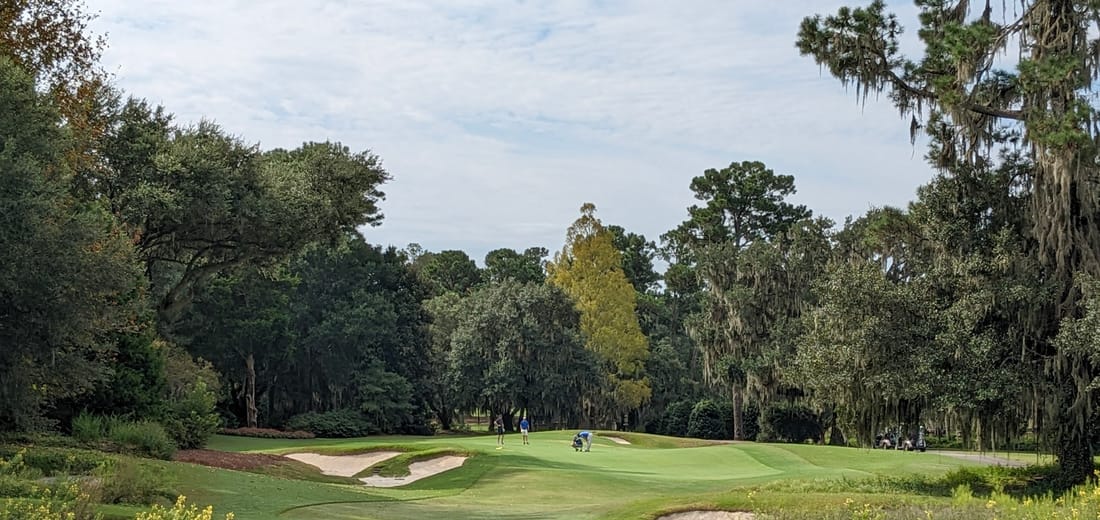
Caledonia is routed through a former rice plantation on the Waccamaw Neck, and the corridors are genuinely narrow. Ancient live oaks and Spanish moss frame the holes rather than decorate them. There is no on-course housing anywhere on the property, which is increasingly rare in the Myrtle Beach market and matters more to the experience than most golfers expect.
The scorecard reads short. Caledonia is a par 70, and from the middle tees it does not look intimidating on paper. It plays considerably bigger than the yardage suggests. The greens are small, the approach angles are pinched by trees, and Strantz built enough contour into the putting surfaces that missing on the wrong side leaves you a putt you cannot control. A big drive does not buy much here. A 150-yard shot from the correct side of the fairway is worth three strokes over the round.
The 18th and the porch
Caledonia's closing hole runs back toward the clubhouse with water short and right of the green, and the clubhouse porch sits directly above it. That means you are hitting your final approach with a gallery of golfers who have already finished, drinks in hand, openly evaluating your swing. The house pastime on that porch is wagering on whether the groups still on the course can carry the water. It is the single most memorable moment on either property, and it is the reason many golfers who have played both remember Caledonia more vividly.
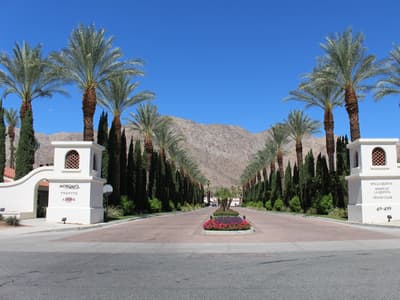
Two other Caledonia details worth knowing: complimentary chowder is served at the turn, a long-standing tradition, and the clubhouse and grounds are worth arriving early for. The entrance drive under the oak canopy is a genuine piece of Lowcountry landscape, not a marketing set piece.
True Blue: scale, sand, and room to swing
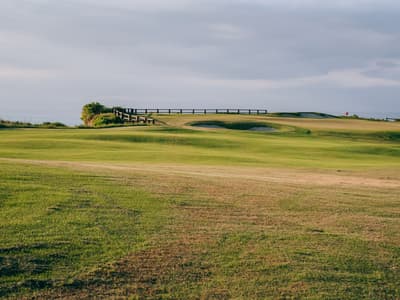
True Blue is the louder course. Strantz worked with a much larger, sandier canvas and built accordingly: enormous waste areas, wide fairways, dramatic elevation moves that feel unusual for coastal South Carolina, and green complexes that sprawl. Where Caledonia asks you to thread, True Blue asks you to commit.
It is also the longer and, from the back tees, the harder of the two. The width is honest width, but the recovery shots are not simple, and a ball in a sprawling sandy waste area with a lip in front of it is a real problem. The greens are large enough that a 60-foot putt is a routine outcome of a decent approach, so lag putting matters here in a way it does not at Caledonia.
The visual character is closer to a desert or heathland course than to a Lowcountry plantation layout. If you have played Strantz's later work, True Blue is more clearly in that lineage: bold, exaggerated shaping, big framing, an architect designing without much restraint. Golfers who prefer their courses expressive tend to rank it first. You can read more about the layout on our True Blue Golf Club course page.
Caledonia vs True Blue: which to play by player type
Before the verdict, the honest breakdown. The two courses reward different games and different priorities, and the right pick depends less on handicap than on what you actually enjoy.
- You are a short, straight hitter. Caledonia. Length is not the defense here, and precision wedge play from the fairway is exactly the skill set the course pays. True Blue's yardage and forced carries will wear you down.
- You are a long, wild hitter. True Blue. The width gives you somewhere to put a bad drive, and Caledonia's tree corridors will take driver out of your hands or take your ball out of play.
- You are a high handicapper who wants to finish with a ball in the bag. True Blue from the correct tees. Wide fairways and sand you can play from beat narrow corridors and small greens for a struggling player.
- You care most about atmosphere and sense of place. Caledonia, decisively. The oaks, the moss, the absence of housing, and the porch are not replicable.
- You care most about architecture and bold design. True Blue. It is the more ambitious and more unusual piece of work, and it is where Strantz's shaping instincts are least constrained.
- You are walking. Caledonia. It is the more compact routing of the two. Confirm walking policies and times when you book; both courses restrict walking seasonally.
- You are entertaining clients or non-golfing spouses. Caledonia. The clubhouse, the drive in, and the porch make it a better place to spend three hours not playing golf.
What the debate usually gets wrong
Two mistakes recur. The first is treating Caledonia's par 70 and modest yardage as evidence that it is the easier course. It is not, particularly around the greens, and golfers who play it from too far back on the strength of the scorecard number get punished. The second is assuming True Blue's width means forgiveness. Width off the tee is not the same as forgiveness on approach, and True Blue's green complexes and waste areas take back most of what the fairways give.
A third, smaller error: booking the earliest available tee time without checking maintenance and aerification schedules. Both courses publish their schedules, and greens in recovery will meaningfully change your impression of either one, especially Caledonia, where putting surface quality is central to the experience.
If you can find a second tee time
Take it, and play True Blue in the morning and Caledonia in the afternoon. The order matters. True Blue's scale and sand read better under flat morning light, and Caledonia's finish is far better when the porch is populated, which it is by mid-afternoon. Both courses sit within a few minutes of each other, so a same-day double is realistic if you book it that way rather than hoping to walk on.
Rates in Pawleys Island swing hard by season, with spring and fall carrying the premium and midsummer and midwinter offering the real value. Confirm current pricing directly, since both courses adjust frequently and package rates through a stay-and-play differ from public walk-up rates. If you are building a broader itinerary around the round, our Myrtle Beach golf destination guide covers how the South Strand courses fit against the rest of the market. One last local note: leave time after the round at Caledonia. Golfers who tee off, play, and drive straight to the next thing miss the part of the day the regulars actually show up for.